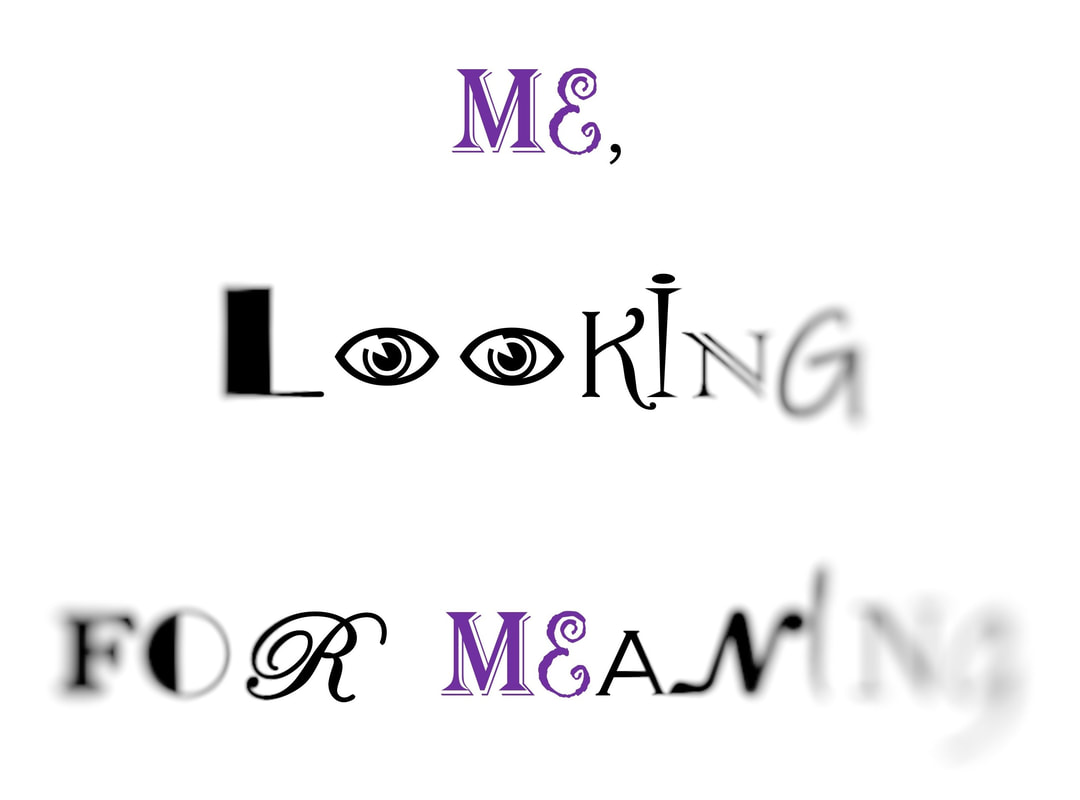
Meaning
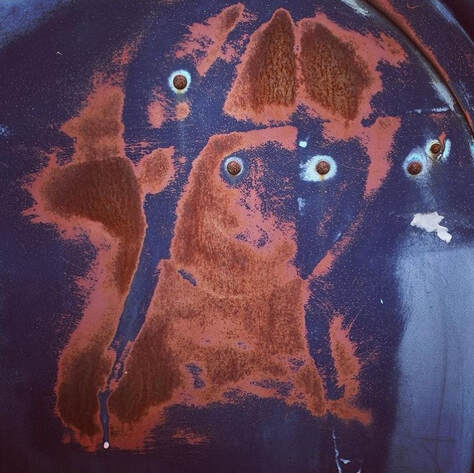
What do you see in this picture? For me, this is a question about meaning, at least in one sense of this word.
In this first sense, "meaning(s)" can be defined as ideas, thoughts, feelings, associations, interpretations and assumptions attached to an object.
For the purpose of this conversation, an "object" can be anything that our senses perceive by seeing, smelling, tasting, hearing or touching it. This can be an aspect of the world outside of us (we see a cloud, we smell a perfume), but also our inner sensations (e.g., emotions, physical pain). In addition, each one of us is an object for ourselves, as we attach meanings to our own body and identity. By the same token, other people are objects to us and we need to interpret them in order to live our everyday lives. (Side note: this is not the same as objectification). Finally, events are also objects that require interpretation.
Most of the time we do not think about meanings of objects we experience. Instead, we take them for granted. This allows us to go about our lives without giving routine actions much thought. Our days are filled with things that make sense. The routine is disrupted when we encounter something unfamiliar (e.g., a strange sound, smell, bodily sensation, person) or when something occurs that we cannot easily explain (e.g., “If I am a good person, why did this happen to me?”). In this case, our brains start working extra hard to attach meanings to this new object (remember that we agreed to call events “objects” as well). In other words, we try to understand it.
Imagine that you are sitting on the train and a person dressed in a particular uniform enters the car. You know that the conductor is here to collect your ticket - or maybe make a tiny hole in it and give it back to you, or do something else to make sure that you are not travelling for free, and that you are not going to travel twice using the same payment. You "simply" know what this situation is about, and what is required from you (I put "simply" in quotation marks because the cognitive processes behind this knowing are far from simple). Because you understand the situation and it makes sense, you are relaxed (or perhaps bored) - unless there is something else on your mind that requires your attention, of course. In contrast, if you are sitting on the train and a naked person walks in, shouting some strange words and pulling tickets out of passengers' hands, you will be not bored or relaxed at all. Instead, you will be struggling to attach meanings to this situation and all the objects involved in order to determine how to react.
The second sense of the word "meaning" is exemplified by the phrase: "This ring has a special meaning for me." What is implied here is importance, as I want to say: "This ring is of special importance for me." Upon a closer examination, however, we will notice that the first and the second senses are connected. We are still talking about ideas, thoughts, associations, interpretations and assumptions attached to the object in question. The ring is important for me because of experiences associated with it in my mind (e.g., my wedding, my relationship, etc.).
Finally, there is the third sense of the word "meaning" worth mentioning. It is similar to "goal" or "purpose": think about the phrase "the meaning of life". This third sense is distinct, yet it is intrinsically connected with the previous two. The purpose of anything depends on ideas, thoughts, associations, interpretations and assumptions attached to this object in people's minds. The purpose is related to the object's importance. For example, we want our life to have meaning, because we hope that our existence will have some significance in the grand scheme of things. Otherwise, "What's the point?".
Meanings have been studied within a variety of disciplines in social sciences and humanities, although often indirectly. As part of the postmodern worldview, semiotics and symbolic interactionism point out that it would be a mistake to think that meanings are just there, waiting to be found. Although we may feel that we are looking for pre-existing meanings, we actually create them as part of communication processes that underlie social coexistence. Meanings we attach to objects are not natural or absolute, yet they can be very difficult to change. It is easier to conclude that certain things just "are what they are" than to explore where their meanings come from - to say nothing of challenging these meanings. Because ideas attached to objects are not universal, we can say that different people belong to different meaning communities that can engage in meaning wars about assumptions and interpretations shared within these groups.
So what is in the picture above? It is actually a rusty side of a mail collection box that I saw in West Hartford, where I lived between 2015 and 2018. I took this picture because the pattern reminded me of an animal. My memories and some interpretations are unique, so they produce individual meanings of the object in question. At the same time, my readers can understand what I am talking about because we have shared meanings. Many people know what a mail collection box is and how rust appears; some have been to West Hartford; and a few would recognize the animal that I was noticed. These shared meanings allow us to understand each other - to a certain extent, at least.
About this project: Start page
In this first sense, "meaning(s)" can be defined as ideas, thoughts, feelings, associations, interpretations and assumptions attached to an object.
For the purpose of this conversation, an "object" can be anything that our senses perceive by seeing, smelling, tasting, hearing or touching it. This can be an aspect of the world outside of us (we see a cloud, we smell a perfume), but also our inner sensations (e.g., emotions, physical pain). In addition, each one of us is an object for ourselves, as we attach meanings to our own body and identity. By the same token, other people are objects to us and we need to interpret them in order to live our everyday lives. (Side note: this is not the same as objectification). Finally, events are also objects that require interpretation.
Most of the time we do not think about meanings of objects we experience. Instead, we take them for granted. This allows us to go about our lives without giving routine actions much thought. Our days are filled with things that make sense. The routine is disrupted when we encounter something unfamiliar (e.g., a strange sound, smell, bodily sensation, person) or when something occurs that we cannot easily explain (e.g., “If I am a good person, why did this happen to me?”). In this case, our brains start working extra hard to attach meanings to this new object (remember that we agreed to call events “objects” as well). In other words, we try to understand it.
Imagine that you are sitting on the train and a person dressed in a particular uniform enters the car. You know that the conductor is here to collect your ticket - or maybe make a tiny hole in it and give it back to you, or do something else to make sure that you are not travelling for free, and that you are not going to travel twice using the same payment. You "simply" know what this situation is about, and what is required from you (I put "simply" in quotation marks because the cognitive processes behind this knowing are far from simple). Because you understand the situation and it makes sense, you are relaxed (or perhaps bored) - unless there is something else on your mind that requires your attention, of course. In contrast, if you are sitting on the train and a naked person walks in, shouting some strange words and pulling tickets out of passengers' hands, you will be not bored or relaxed at all. Instead, you will be struggling to attach meanings to this situation and all the objects involved in order to determine how to react.
The second sense of the word "meaning" is exemplified by the phrase: "This ring has a special meaning for me." What is implied here is importance, as I want to say: "This ring is of special importance for me." Upon a closer examination, however, we will notice that the first and the second senses are connected. We are still talking about ideas, thoughts, associations, interpretations and assumptions attached to the object in question. The ring is important for me because of experiences associated with it in my mind (e.g., my wedding, my relationship, etc.).
Finally, there is the third sense of the word "meaning" worth mentioning. It is similar to "goal" or "purpose": think about the phrase "the meaning of life". This third sense is distinct, yet it is intrinsically connected with the previous two. The purpose of anything depends on ideas, thoughts, associations, interpretations and assumptions attached to this object in people's minds. The purpose is related to the object's importance. For example, we want our life to have meaning, because we hope that our existence will have some significance in the grand scheme of things. Otherwise, "What's the point?".
Meanings have been studied within a variety of disciplines in social sciences and humanities, although often indirectly. As part of the postmodern worldview, semiotics and symbolic interactionism point out that it would be a mistake to think that meanings are just there, waiting to be found. Although we may feel that we are looking for pre-existing meanings, we actually create them as part of communication processes that underlie social coexistence. Meanings we attach to objects are not natural or absolute, yet they can be very difficult to change. It is easier to conclude that certain things just "are what they are" than to explore where their meanings come from - to say nothing of challenging these meanings. Because ideas attached to objects are not universal, we can say that different people belong to different meaning communities that can engage in meaning wars about assumptions and interpretations shared within these groups.
So what is in the picture above? It is actually a rusty side of a mail collection box that I saw in West Hartford, where I lived between 2015 and 2018. I took this picture because the pattern reminded me of an animal. My memories and some interpretations are unique, so they produce individual meanings of the object in question. At the same time, my readers can understand what I am talking about because we have shared meanings. Many people know what a mail collection box is and how rust appears; some have been to West Hartford; and a few would recognize the animal that I was noticed. These shared meanings allow us to understand each other - to a certain extent, at least.
About this project: Start page