What Does It Mean to "Understand"?

I recently understood that the word "understand" can be difficult to understand... Have you ever felt that language is so unhelpful? I get this feeling a lot. When it happens, I open a dictionary to look for the meaning of the word in question there. This simple action does not necessarily solve the problem, but it does provide some insights.
Let's take a look at the list of definitions in the Merriam-Webster online dictionary (n.d.). According to this source, to "understand" is:
- to grasp the meaning of something
- to grasp reasonableness of something
- to have thorough or technical acquaintance with or expertness in the practice of something
- to be thoroughly familiar with the character and propensities of something
- to accept as a fact or truth or regard as plausible without utter certainty
- to interpret in one of a number of possible ways
- to supply in thought as though expressed
- to have the power of comprehension
- to achieve a grasp of the nature, significance, or explanation of something
- to believe or infer something to be the case
- to show a sympathetic or tolerant attitude toward something
Yes, all these definitions are connected. You can see how the same word can refer to all of the ideas they represent. We are not dealing here with homonyms, which have the same spelling or pronunciation but different meanings and origins (e.g., "pen" as "a holding area for animals" and "a writing instrument"). At the same time, the nuances of the definitions listed above suggest that the word "understand" can easily cause some, well, misunderstanding.
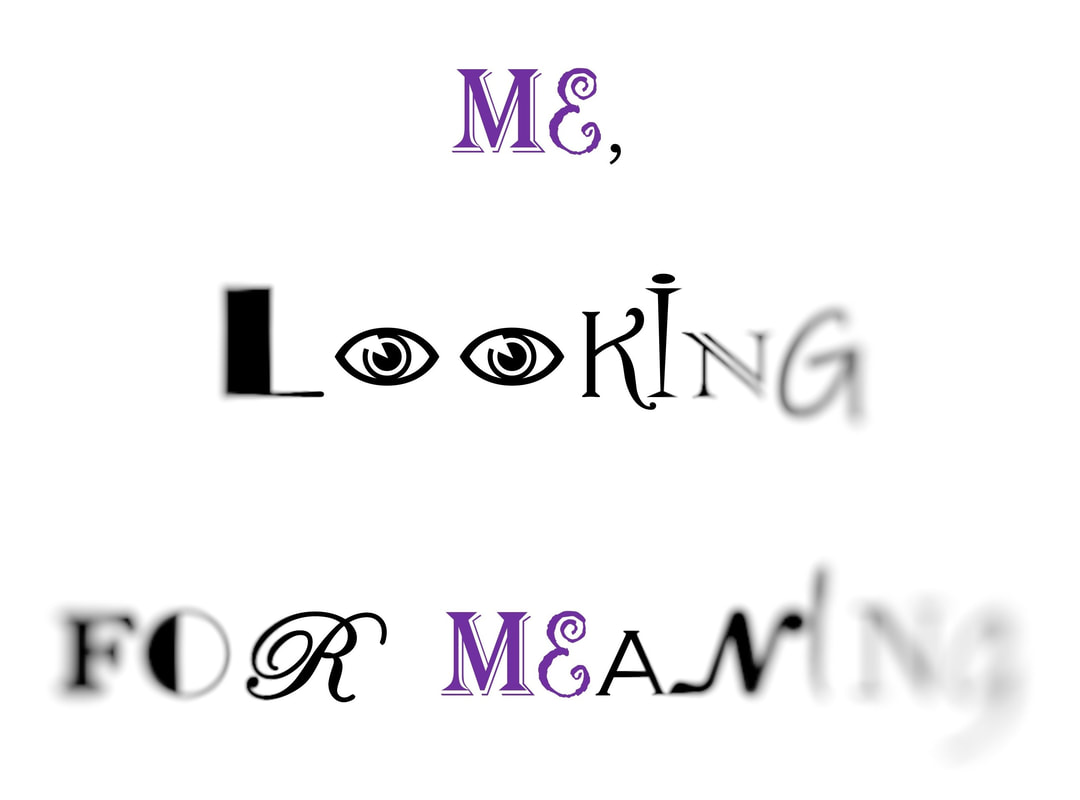
For example, what do we mean when we say that we understand a book? Do we want to say that we know the meaning of each word because we speak the language the book is written in (and/or are familiar with the terminology used in it)? Do we think that this text fits our reasoning, in a sense that we can relate to the author's logic? Do we suggest that there is only one interpretation of the book (intended by the author) and that we were able to grasp it? Or do we want to say that we have formed our own interpretation while acknowledging that it is just one of many? As a matter of fact, these questions apply to any text (broadly speaking), including films, news articles, photos, websites, and much more. For example, how can we make sense of the art piece in the picture above?
If we don't take into consideration nuances of the word "understand," we can easily forget that any text has many interpretations, and that it may be impossible to know the correct one. Moreover, there are reasons to doubt that any person truly understands her own creations. Roland Barthes claimed in his famous essay The Death of the Author (1977) that experiences of a writer cannot explain texts she produces, and that nobody can fully grasp all the influences that have shaped their own thinking. Questions about the possibility of understanding a text lead to even broader philosophical questions about the possibility of understanding ourselves.
And what about others? What do we mean when we say that we understand or don't understand another person? Trying to answer this question is important for improving the quality of any relationship. It may be especially important now, when we are so divided by polarization. Many times I have heard people say: "I'll never understand how somebody can do this!" I find this phrase really intriguing. Does the word "understand" in it mean being sympathetic toward somebody, finding logic in their actions that fits our logic, or being able to grasp the logic of their perspective without embracing it?
It is my belief that we can understand a logic behind any actions, even if we find them morally wrong. Notice: it's not the same as saying that these actions are fine. Perhaps, we avoid looking for this logic exactly because of the confusion around the word "understand." Many people may feel that tracing the origin of a radically different worldview cannot be done without accepting it some level. I believe that this is not the case. Condemning specific actions and doing our best to stop the person behind them should nor prevent us from looking for deeper reasons of these actions. I am talking about reasons that go beyond simple explanations like "everyone is entitled to their own opinions" or "people who do that are just mean and stupid."
SOURCES:
Barthes, R. (1977). The death of the author. In R. Barthes Image-Music-Text (S. Heath, Trans.) (pp. 142-148). Hill and Wang.
Merriam-Webster. (n.d.). Understand. In Merriam-Webster.com dictionary. https://www.merriam-webster.com/dictionary/understand
Your Dictionary. (n.d.). Examples of homonyms. https://examples.yourdictionary.com/examples-of-homonyms.html
About this project: Start page
Let's take a look at the list of definitions in the Merriam-Webster online dictionary (n.d.). According to this source, to "understand" is:
- to grasp the meaning of something
- to grasp reasonableness of something
- to have thorough or technical acquaintance with or expertness in the practice of something
- to be thoroughly familiar with the character and propensities of something
- to accept as a fact or truth or regard as plausible without utter certainty
- to interpret in one of a number of possible ways
- to supply in thought as though expressed
- to have the power of comprehension
- to achieve a grasp of the nature, significance, or explanation of something
- to believe or infer something to be the case
- to show a sympathetic or tolerant attitude toward something
Yes, all these definitions are connected. You can see how the same word can refer to all of the ideas they represent. We are not dealing here with homonyms, which have the same spelling or pronunciation but different meanings and origins (e.g., "pen" as "a holding area for animals" and "a writing instrument"). At the same time, the nuances of the definitions listed above suggest that the word "understand" can easily cause some, well, misunderstanding.
For example, what do we mean when we say that we understand a book? Do we want to say that we know the meaning of each word because we speak the language the book is written in (and/or are familiar with the terminology used in it)? Do we think that this text fits our reasoning, in a sense that we can relate to the author's logic? Do we suggest that there is only one interpretation of the book (intended by the author) and that we were able to grasp it? Or do we want to say that we have formed our own interpretation while acknowledging that it is just one of many? As a matter of fact, these questions apply to any text (broadly speaking), including films, news articles, photos, websites, and much more. For example, how can we make sense of the art piece in the picture above?
If we don't take into consideration nuances of the word "understand," we can easily forget that any text has many interpretations, and that it may be impossible to know the correct one. Moreover, there are reasons to doubt that any person truly understands her own creations. Roland Barthes claimed in his famous essay The Death of the Author (1977) that experiences of a writer cannot explain texts she produces, and that nobody can fully grasp all the influences that have shaped their own thinking. Questions about the possibility of understanding a text lead to even broader philosophical questions about the possibility of understanding ourselves.
And what about others? What do we mean when we say that we understand or don't understand another person? Trying to answer this question is important for improving the quality of any relationship. It may be especially important now, when we are so divided by polarization. Many times I have heard people say: "I'll never understand how somebody can do this!" I find this phrase really intriguing. Does the word "understand" in it mean being sympathetic toward somebody, finding logic in their actions that fits our logic, or being able to grasp the logic of their perspective without embracing it?
It is my belief that we can understand a logic behind any actions, even if we find them morally wrong. Notice: it's not the same as saying that these actions are fine. Perhaps, we avoid looking for this logic exactly because of the confusion around the word "understand." Many people may feel that tracing the origin of a radically different worldview cannot be done without accepting it some level. I believe that this is not the case. Condemning specific actions and doing our best to stop the person behind them should nor prevent us from looking for deeper reasons of these actions. I am talking about reasons that go beyond simple explanations like "everyone is entitled to their own opinions" or "people who do that are just mean and stupid."
SOURCES:
Barthes, R. (1977). The death of the author. In R. Barthes Image-Music-Text (S. Heath, Trans.) (pp. 142-148). Hill and Wang.
Merriam-Webster. (n.d.). Understand. In Merriam-Webster.com dictionary. https://www.merriam-webster.com/dictionary/understand
Your Dictionary. (n.d.). Examples of homonyms. https://examples.yourdictionary.com/examples-of-homonyms.html
About this project: Start page